

Last night, I discovered something that changed how I think about teaching my daughter. It started, of all things, with a family stroll.
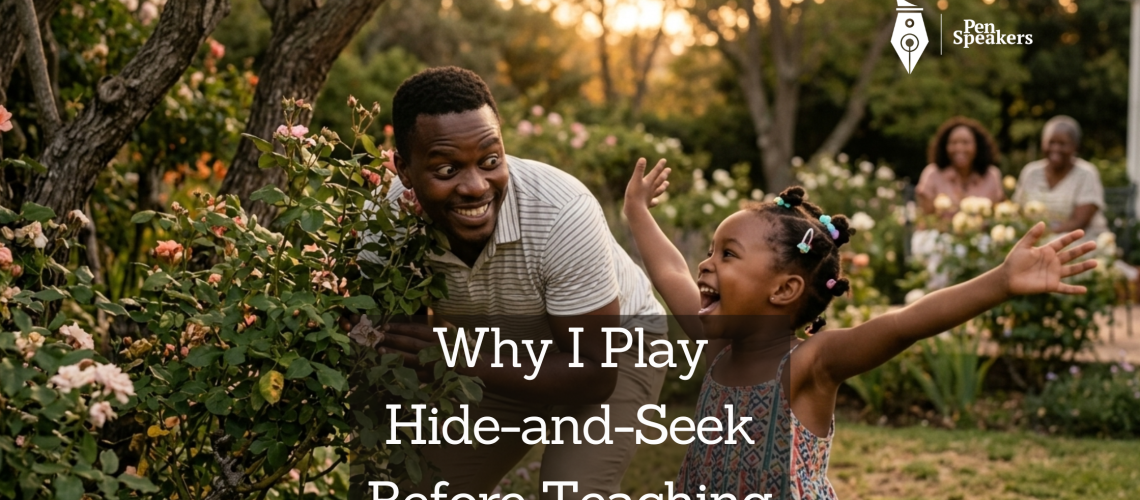
The four of us, my wife, my daughter Pearl, her grandmother, and I, were walking around our estate. Just a typical evening walk to close the day. But then Pearl and I broke away from the group. We took a bush path, hid behind a corner, and surprised my wife and her grandmother. They hid too. We all played this spontaneous game of hide-and-seek, laughing, running, searching for each other in the warm evening air.
It was goofy. It was unplanned. It was pure joy.
And then something remarkable happened when we got home.
The Bedtime Lesson that Surprised Me
After our playful stroll, I put Pearl to bed and read her a bedtime story: “The Story of the River” from Alibaba and Other Stories. This wasn’t casual reading. I asked her comprehension questions, technical questions about tributaries, river systems, and geographical concepts, the kind that require real thinking.
And she answered them brilliantly. Not just correctly, but confidently. She wasn’t intimidated. She wasn’t bored. She wasn’t resistant. The questions were quite advanced for her age, yet she engaged fully, asked follow-up questions when she was unsure, and was genuinely curious throughout.
That is when it struck me: she had learnt better because we had just played together.
“Teaching isn’t only about content delivery. It is about creating the emotional conditions in which learning becomes possible.”
What Happens in the Brain When We Play
Pearl was able to connect with the technical content because she had just experienced joy, safety, and playfulness with me. We had fun together. I showed her a side of her father that wasn’t serious or instructional, just present and playful. And in that emotional state, feeling loved, safe, and joyful, her brain was primed to learn.
This is not merely anecdotal. It is backed by neuroscience.
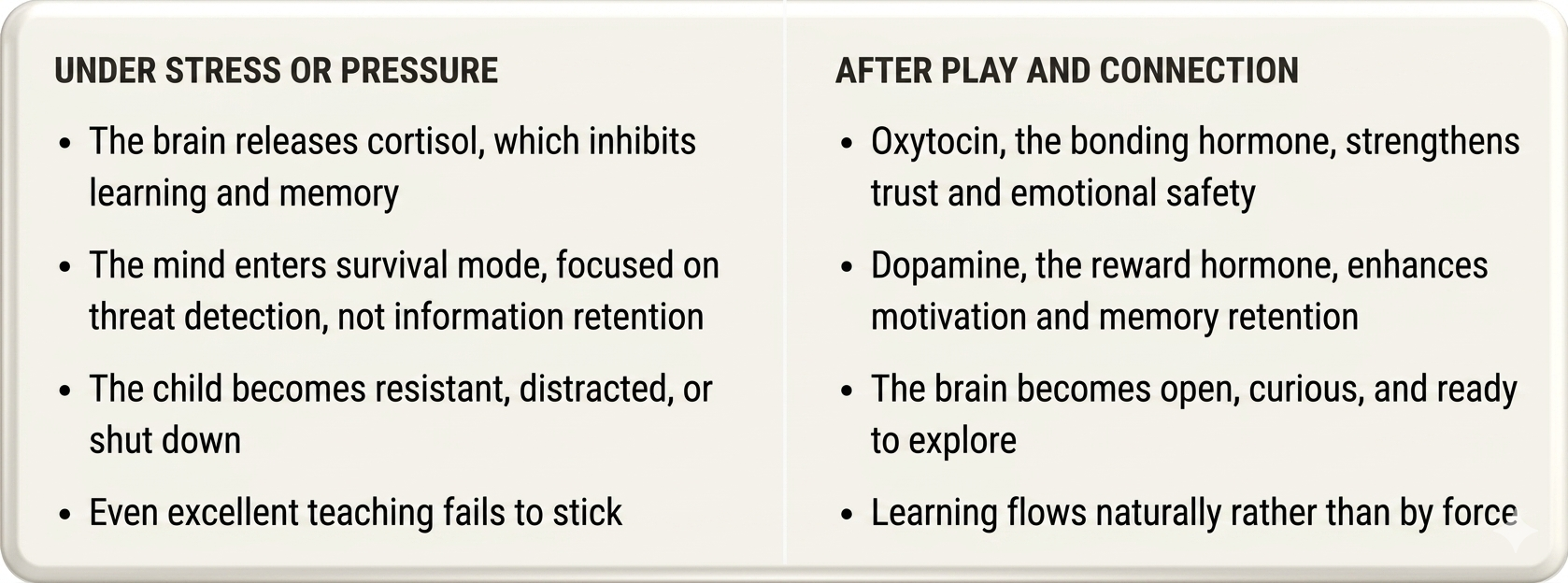
The hide-and-seek game wasn’t just fun. It was preparation. It told Pearl’s brain: you are safe, you are loved, your father isn’t a taskmaster but someone who genuinely enjoys being with you. And when I transitioned from play to teaching, her mind was already in the optimal state to receive what I was sharing.
What Most of Us Miss About Teaching Our Children
Most of us approach teaching our children the way we were taught: sit down, pay attention, focus, answer the questions. When a child resists or seems bored, we assume they are lazy or distracted. We push harder. We grow frustrated. But here is what we miss: a stressed or emotionally disconnected child cannot learn effectively.
You can have the best curriculum, the clearest explanations, the most engaging materials, but if your child’s brain is in a state of stress or disconnection, none of it will take root. The problem is rarely the content. It is nearly always the conditions.
I teach Pearl twice a week in focused sessions covering Maths, ICT, Reasoning, and Communication. My goal is to elevate her learning to age level 10 and above in key areas by the end of the year. But if I approach those sessions purely as instruction time, just sitting her down and opening a textbook, I am setting us both up for frustration. She resists. The session feels like a chore. And we both leave it a little depleted.
But if I begin with play, even just ten to fifteen minutes of goofy, joyful connection, everything changes. Her guard comes down. Her brain shifts from “I have to do this” to “I want to engage with Dad.” And when we transition to the lesson, she is ready, not because I forced her, but because her brain is already in the right state.
The Rhythm I Am Building into Our Sessions
Based on what I discovered that evening, here is what I am implementing before every teaching session with Pearl: we play first. Not structured play. Not educational games designed to sneak in learning. Just pure, unstructured, joyful connection.
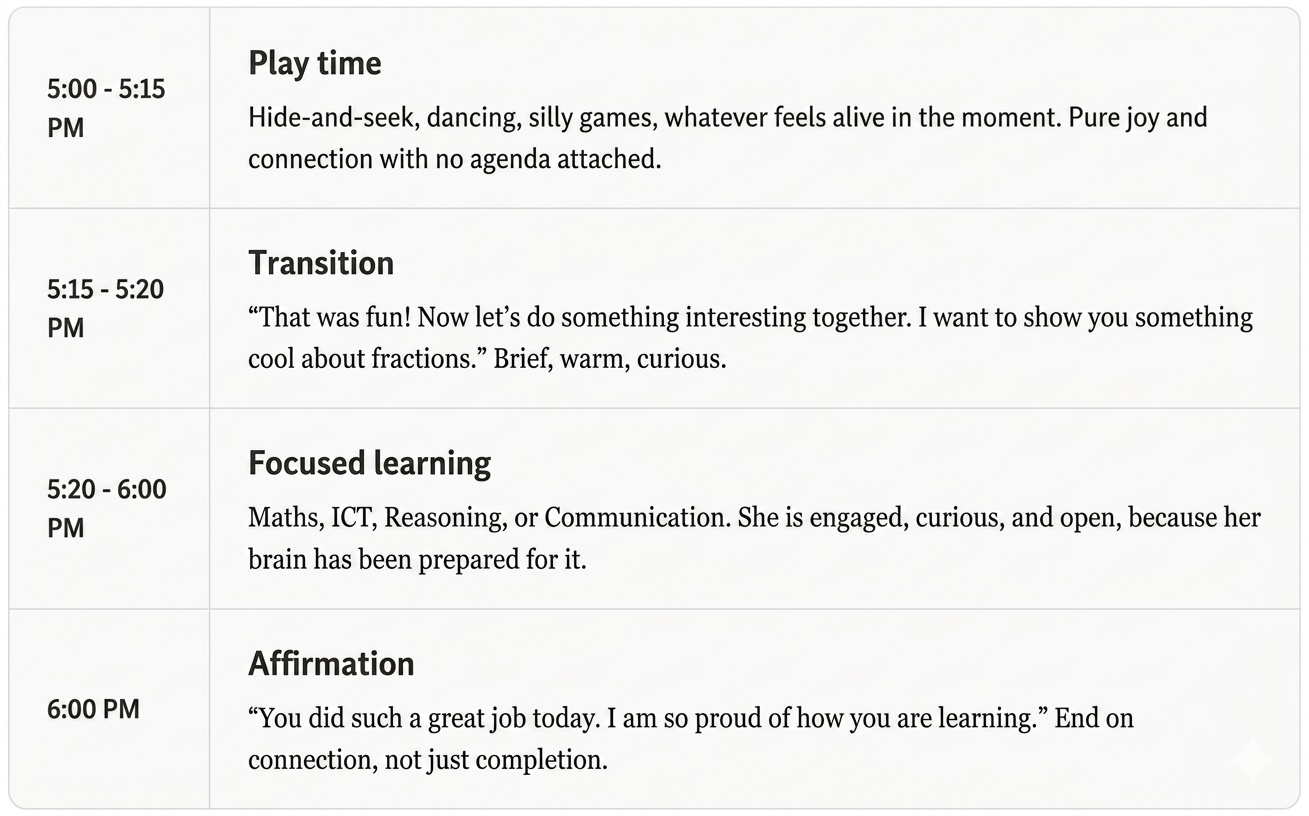
The play is not a bribe. It is not “if you do your Maths, then we will play.” The play is the preparation. It is what makes the learning possible.
This Applies Further than You Might Think
If you are a classroom teacher, this changes how you might approach the first five minutes of your lesson. Instead of diving straight into content, what if you began with a quick game, a funny story, a moment of shared laughter, or a question that invites students to share something personal? You are not wasting time. You are building the emotional conditions for everything that follows. Students who feel safe and genuinely connected to their teacher learn better. It is that straightforward.
And interestingly, this principle reaches into adult relationships too. Think about the difficult conversations you need to have with your spouse. If you launch straight into “we need to talk about the budget,” their brain goes immediately into defence mode. But if you connect first, with a hug, a warm compliment, a shared laugh, a fond memory recalled together, you create emotional safety. And then, when you do raise the difficult thing, you are far more likely to have a productive conversation. Connection before correction. Play before instruction. Joy before demand.
What I Am Learning as a Father
I have always known that spending time with Pearl matters. What I am realising now is that the quality of that time shapes her capacity to receive what I want to teach her. I can spend an hour trying to teach her Maths while she is resistant and distracted, or I can spend ten minutes playing with her and then thirty minutes teaching her while she is engaged and curious. The second approach is more effective. And honestly, it is more enjoyable for both of us.
I do not want teaching my daughter to feel like a chore, for her or for me. I want it to be something we both look forward to, something that strengthens our relationship rather than strains it. And play, it turns out, is the bridge.
A Challenge for Parents and Teachers
Before your next teaching session, try this: play first. Do not skip it. Do not dismiss it as wasting time. Spend ten to fifteen minutes in pure, joyful, unstructured connection. Then transition to the lesson. And watch what happens.



2 thoughts on “Why I Play Hide-and-Seek Before Teaching My Daughter”
I totally agree with this. I learned better as a child in playful environments. It’s still kind of true for me as an adult because, even in playful situations, I’m able to learn and draw life lessons from them.
Aptly put Anike. I learn from you in your playful articles too.